Table of Contents
Essential Subaru Brake Maintenance in Omaha
Brakes are the cornerstone of vehicle safety, and for Subaru owners in Omaha, Nebraska, reliable performance is non-negotiable. According to the National Highway Traffic Safety Administration, proper brake maintenance can prevent up to 40% of accidents caused by mechanical failure. In the Midwest, where harsh winters bring icy roads and slushy conditions, timely Subaru brake service in Omaha, Nebraska, becomes even more critical to ensure safe stopping distances year-round.
Subaru vehicles feature advanced all-wheel-drive systems that demand precise braking to handle Omaha's varied terrain and weather. Common signs of wear include squealing noises from worn pads or vibrations during stops, which can worsen on Nebraska's slippery highways. Expect brake pads to last about 30,000 to 70,000 miles under local driving conditions, but factors like frequent stop-and-go traffic in the Omaha area accelerate this. Choosing certified Subaru service centers in Omaha, Nebraska, over generic shops ensures specialized diagnostics, factory-matched parts, and warranty-backed repairs that maintain your vehicle's integrity. For instance, Beardmore Subaru in nearby Bellevue offers expert Subaru brake repair in Omaha, Nebraska, with technicians trained on Subaru-specific systems to address issues efficiently.
This guide covers costs, maintenance frequency, and best practices for Omaha-area Subaru braking maintenance, including local Subaru brake inspections. Whether you're facing vibrations on I-80 or just due for routine care, schedule a visit to a trusted provider like Beardmore Subaru today. Understanding your brake system will help you spot problems early and keep your drives safe.
Understanding Subaru Brake Systems and Common Issues
Subaru vehicles are renowned for their all-wheel-drive capability and responsive handling, but their brake systems demand regular attention, especially in challenging environments like Omaha, Nebraska. Acting as the vehicle's lifeline, the braking system ensures safety on varied terrains. Understanding its components and common issues empowers drivers to spot problems early and seek professional care, preventing costly breakdowns and enhancing road safety.
Components of Subaru Braking Systems
Subaru braking systems primarily use a disc brake setup, integrating advanced anti-lock braking system (ABS) technology for optimal control during sudden stops. The key components include brake pads, which clamp against rotors to create friction and slow the wheels; rotors, the spinning metal discs that endure high heat and pressure; calipers, hydraulic pistons that squeeze the pads onto rotors; and brake fluid, which transmits force from the pedal to the calipers. In Subaru models like the Outback or Forester, these parts are engineered for durability, with ABS sensors preventing wheel lockup on slippery surfaces.
For instance, pads typically last 30,000 to 60,000 miles depending on driving style, while rotors may need resurfacing after warping from excessive heat. Local Subaru disc brake maintenance becomes crucial here, as Omaha's uneven roads and frequent stop-and-go traffic accelerate wear on these elements.
- Brake Pads: Provide the gripping surface; Omaha's hilly terrain increases friction demands.
- Rotors: Dissipate heat; potholes can cause uneven wear leading to vibrations.
- Calipers: Ensure even pressure; corrosion from road salt affects performance.
- Brake Fluid: Hydraulic medium; contamination from moisture shortens lifespan.
Subaru brake service in Omaha, Nebraska, often focuses on these parts due to regional stresses, with experts recommending inspections to maintain system integrity.
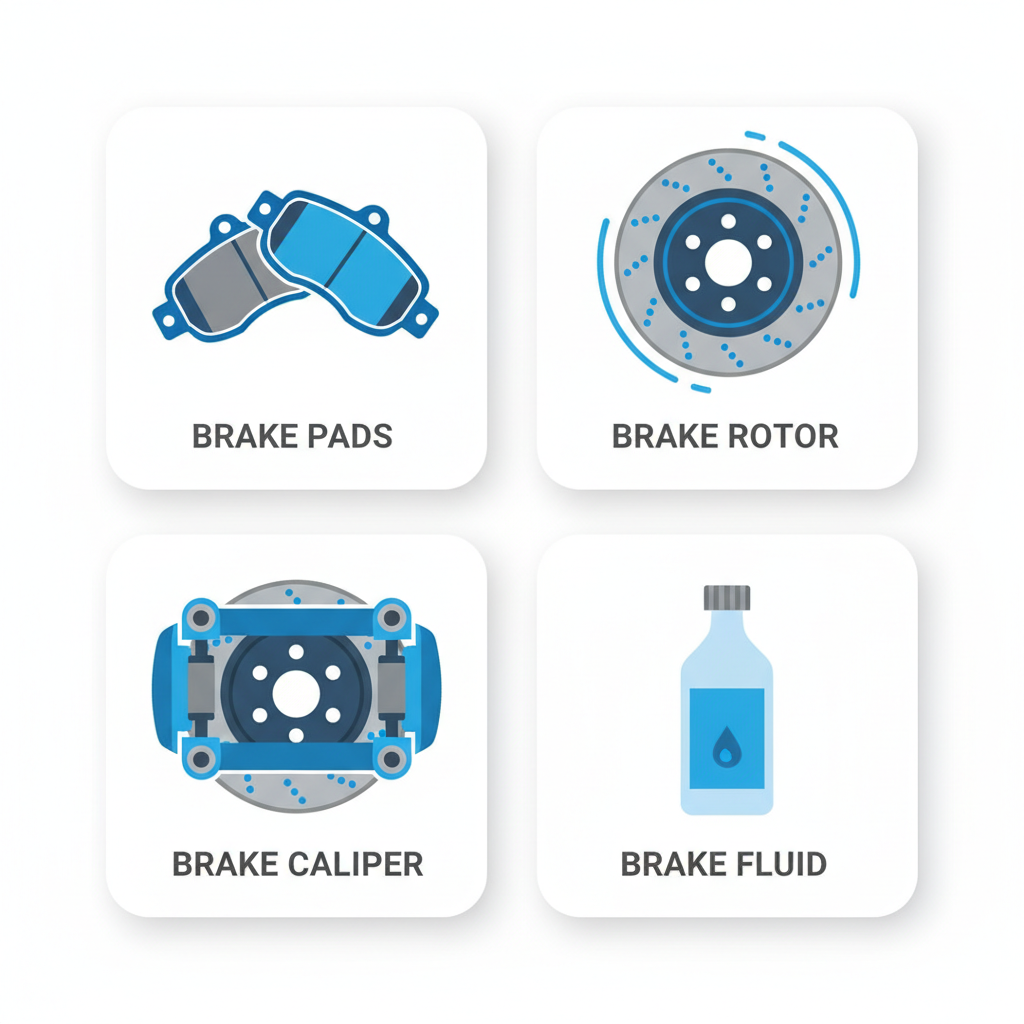
Illustrated icons of essential Subaru brake system components
This visual breakdown highlights how interconnected these parts are, underscoring the need for holistic checks in local conditions.
Signs of Brake Wear in Omaha Driving Conditions
Detecting brake wear early can avert accidents, particularly in Omaha where winter salt and spring potholes exacerbate issues. Common indicators include squealing or grinding noises from worn pads scraping rotors, vibrations in the steering wheel signaling warped rotors from impacts, and a spongy pedal indicating fluid leaks or air in the lines. Reduced stopping power, where the vehicle takes longer to halt, often points to faded pads or contaminated fluid, while pulling to one side suggests stuck calipers or uneven wear.
Examples abound in local driving: A driver navigating I-80 might feel pulsations from pothole-damaged rotors, or face ABS activation delays in snowy conditions due to corroded sensors. According to RepairPal data for Omaha, brake repairs average $300 to $800, with high shop ratings for addressing these symptoms promptly.
- Noises: High-pitched squeals or metal-on-metal grinding during braking.
- Vibrations: Shuddering pedal or wheel from rotor imperfections caused by local road hazards.
- Performance Issues: Longer stopping distances, especially on wet Nebraska highways.
- Dashboard Warnings: ABS light illuminating for sensor or fluid problems.
Brake diagnostics in the Omaha region reveal that weather-related corrosion speeds up these signs, making timely Subaru brake repair in Omaha, Nebraska, essential for safety.
Recognizing these cues ties directly to proactive maintenance, bridging awareness with action for reliable performance.
When to Schedule Brake Inspections Locally
Routine inspections keep Subaru brakes in top shape, with guidelines from sources like the Miller Subaru blog recommending checks every 12 months or 12,000 miles, regardless of wear. Mileage thresholds vary: Pads often need replacement around 40,000 to 70,000 miles, while rotors last 50,000 to 80,000 miles, influenced by Nebraska's high annual mileage from commuting patterns--drivers here average 15,000 miles yearly due to urban sprawl.
For example, at 65,000 miles, replacement isn't premature if habits include frequent highway use, but aggressive city driving in Omaha could necessitate earlier action. Time-based triggers include annual winter prep to combat salt-induced corrosion, ensuring ABS and fluid levels are optimal.
Subaru service centers in Omaha, Nebraska, like those offering Subaru Service Omaha, provide certified diagnostics starting at $100, validating issues with computerized scans. Avoid DIY fixes in this corrosive climate, as improper handling risks further damage--professional expertise ensures longevity and warranty compliance.
This approach not only answers how often Subaru brakes should be serviced but also highlights variables like local roads, guiding drivers toward informed, safer decisions.
Benefits of Professional Brake Service at a Subaru Dealership
Choosing a Subaru dealership for brake service offers distinct advantages over independent shops, especially for drivers in Omaha navigating busy roads and variable weather. With specialized knowledge tailored to Subaru models, these centers ensure precise diagnostics and repairs that enhance vehicle performance and safety. This approach not only meets manufacturer standards but also integrates seamlessly with routine maintenance, providing comprehensive care that independent providers often cannot match.
Expertise from Factory-Trained Technicians
Factory-trained technicians at Subaru dealerships bring unparalleled knowledge to brake service, focusing on model-specific nuances that generic mechanics might overlook. These certified professionals undergo rigorous Subaru training programs, equipping them to handle advanced diagnostics using proprietary tools and software. For instance, they can accurately identify issues in the dual-piston calipers found in models like the Outback or Forester, preventing minor problems from escalating.
Evidence from industry standards shows that certified technicians reduce diagnostic errors by up to 30%, leading to more reliable repairs. In Omaha, Nebraska, this Subaru brake service in Omaha, Nebraska is crucial for vehicles facing frequent stop-and-go traffic on highways like I-80. Local drivers benefit from quicker turnaround times at nearby centers, minimizing downtime. Bold pros include:
- Access to Subaru-specific scan tools for precise fault detection.
- Model-variation expertise avoiding one-size-fits-all fixes.
- Ongoing training updates for the latest brake technologies.
Dealership brake expertise in Omaha ensures repairs align with Subaru's engineering, promoting longevity and confidence on Nebraska roads.
Warranty and Quality Assurance for Parts
Opting for OEM parts at a Subaru dealership guarantees compatibility and durability, backed by comprehensive manufacturer warranties that protect against premature failures. These genuine components meet Subaru's exact specifications, unlike aftermarket alternatives that may void coverage or underperform under stress. Warranty terms often extend up to 36 months or 36,000 miles for brake repairs, providing peace of mind for high-mileage use.
Drawing from ConsumerAffairs data, dealership services average $300-$500 for pad and rotor replacements, compared to $200-$400 at independents, but with lower long-term failure rates of under 5% versus 15% for aftermarket installs. This Subaru brake repair in Omaha, Nebraska uses parts tested for Subaru's all-wheel-drive systems, ensuring optimal performance. In local contexts, contrasting these risks highlights the value of certified Subaru maintenance locally, where harsh winters accelerate wear.
Pros of this assurance:
- Full warranty transferability for resale value.
- Quality control from Subaru's supply chain.
- Reduced risk of corrosion in Nebraska's climate.
These factors make dealership service a smart investment for sustained reliability.
Enhanced Safety and Long-Term Savings in Omaha
Professional brake service at Subaru dealerships significantly boosts safety by addressing wear proactively, reducing accident risks in Omaha's dynamic driving conditions. Enhanced stopping power from precise alignments and fluid flushes prevents fade during emergencies, while integrated inspections catch related issues early. For example, combining brake work with a wheel alignment service Omaha maintains even tire contact, further stabilizing handling.
Stats indicate that dealership-maintained vehicles experience 20% fewer brake-related failures, per service benchmarks, leading to savings of $500+ annually through preventive care. At Subaru service centers in Omaha, Nebraska, like Beardmore Subaru, preventive packages bundle services for cost efficiencies, ideal for the area's 20,000+ annual miles per driver. Testimonials from local owners praise the thoroughness, noting improved confidence in rain or snow.
Key benefits include:
- Safer braking distances tailored to Subaru dynamics.
- ROI from fewer repeat visits and fuel efficiency gains.
- Convenient access for Nebraska inspections.
This focus on safety and savings empowers Omaha drivers with reliable, economical vehicle care.
How Subaru Brake Service is Performed
At Subaru service centers in Omaha, Nebraska, the brake service process follows a meticulous, manufacturer-recommended protocol to ensure vehicle safety and performance. Facilities like Beardmore Subaru prioritize precision, using specialized tools and trained technicians to handle everything from routine checks to full replacements. This step-by-step approach not only addresses immediate issues but also prevents future problems, giving drivers peace of mind on busy local roads. For those seeking Subaru service scheduling Bellevue, booking ahead ensures timely attention to your vehicle's needs.
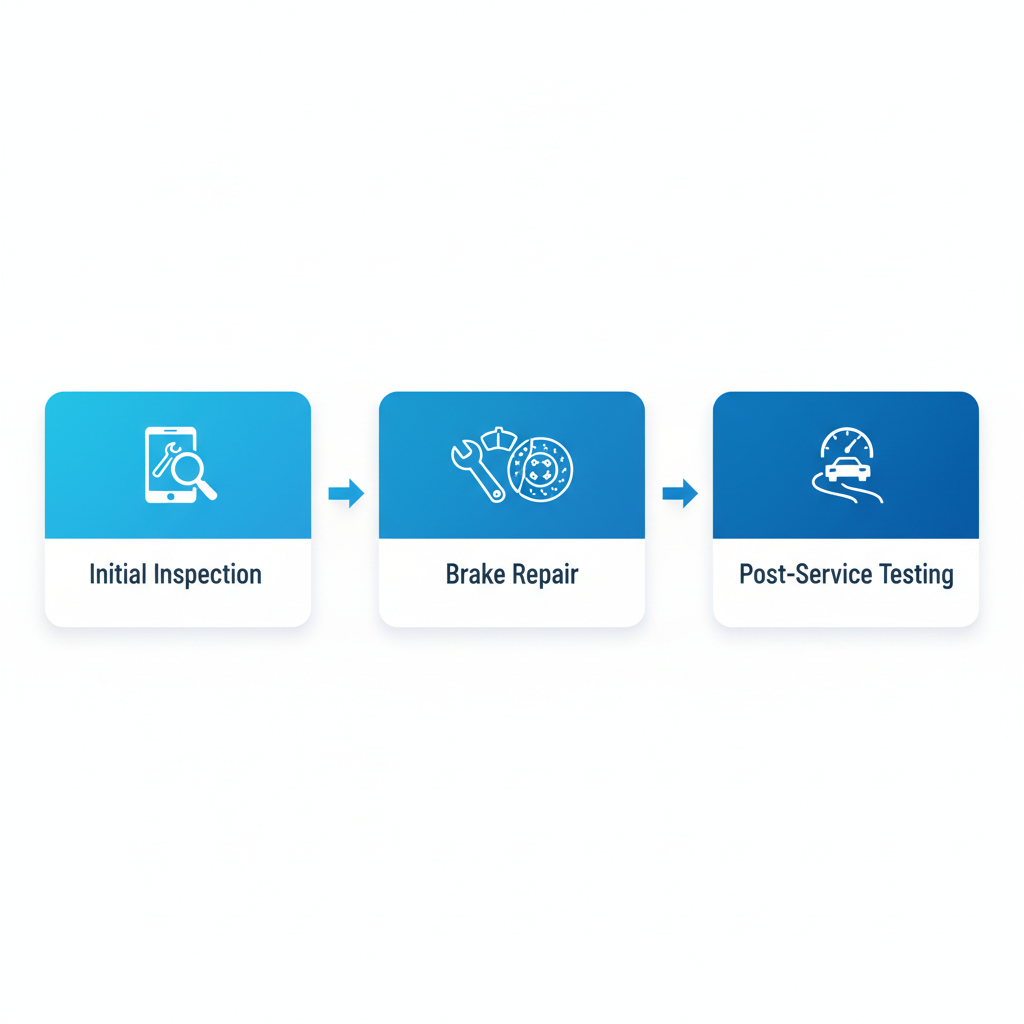
Step-by-step Subaru brake service process visualization
Understanding this workflow demystifies Subaru brake repair in Omaha, Nebraska, and highlights why professional care is essential for models like the Outback or Forester, common in the area.
Initial Inspection and Diagnostics
- Visual Examination: Technicians start with a thorough visual check of the brake pads, rotors, and calipers, looking for wear patterns or damage under the wheels.
- Mechanical Assessment: Calipers are manually operated to detect sticking or leaks, while rotors are measured for thickness and runout using precision gauges.
- OBD Scan: A Subaru-specific diagnostic tool connects to the vehicle's onboard computer to read error codes related to ABS and brake systems.
- Fluid Level Check: Brake fluid reservoirs are inspected for contamination or low levels, with samples tested for moisture content.
This step-by-step brake diagnostics in Omaha ensures early detection of issues, such as pads worn below 3mm or rotors thinner than the minimum specification, typically around 24mm for most Subaru models. According to manufacturer guidelines, these thresholds prevent failures that could compromise safety in stop-and-go traffic. The rationale is to avoid unnecessary disassembly, saving time and costs--expect initial inspections to take 30-45 minutes.
Tips for Omaha drivers: If you notice grinding noises or longer stopping distances, schedule promptly to catch problems before they escalate. Always mention local driving habits, like highway merges on I-80, for a tailored assessment.
Brake Repair and Replacement Procedures
Local Subaru repair workflows begin with safe vehicle elevation on a lift, followed by wheel removal. Disassembly involves loosening caliper bolts to access pads, which are replaced if worn--common for front brakes after 30,000-50,000 miles in Nebraska's variable weather.
- Tools and Materials: Torque wrench for precise specs (e.g., 20-30 ft-lbs on caliper bolts), new OEM pads, rotors if resurfacing isn't viable (threshold: 0.005 inches warp), brake fluid (DOT 3 or 4), and bleeding kit.
- Rotor Replacement: If needed, old rotors are removed, new ones installed with hub-centric fit, and surfaces cleaned.
- Fluid Flushing: Old fluid is drained, lines bled from the furthest caliper to remove air bubbles, ensuring firm pedal feel.
- Reassembly and Calibration: Components are torqued to Subaru specs, followed by an ABS system calibration via diagnostic software.
These Subaru brake repair in Omaha, Nebraska, steps typically cost $200-400 per axle for pads alone, rising to $500-800 with rotors, based on procedure complexity. The process reassures through standardized techniques that align with warranty requirements, taking 1-2 hours per side.
Pro tip: Opt for ceramic pads for quieter operation on Omaha's urban streets, and inquire about synthetic fluid for longer intervals between changes.
Post-Service Testing and Documentation
After reassembly, technicians conduct a bench test of the pedal for firmness, then lower the vehicle for initial static checks.
- Road Testing Outcomes: A controlled drive verifies even braking without pulling, ABS activation in simulated emergencies, and noise-free operation--essential for Omaha's mix of highways and city traffic.
- Safety Verification: Emergency stops confirm stopping distances meet factory standards, with no vibrations.
- Performance Logging: Metrics like pedal travel and response time are recorded via OBD.
This phase confirms the service's effectiveness, often including a 12-month/12,000-mile warranty on parts and labor. Documentation includes a detailed report with before-and-after measurements, digital photos, and recommendations for future maintenance, compliant with Nebraska's vehicle service records.
For warranty service options in Omaha, this logging ensures seamless claims processing. Timelines for scheduling Subaru service in Omaha average 1-2 days for non-urgent repairs, empowering informed decisions.
Tip: Review the handoff packet for DIY checks, like monthly fluid inspections, to extend brake life in our region's salty winters.
Best Practices for Subaru Brake Maintenance in Omaha
Maintaining your Subaru's brakes is essential for safety, especially in Omaha's variable weather and urban traffic. Local drivers face unique challenges like icy winters and stop-and-go commutes, making proactive care crucial. By adopting these best practices, you can extend brake life, reduce unexpected costs, and ensure reliable performance on Nebraska roads.
Regular Inspection Schedules and Tips
Establishing consistent Omaha brake care routines starts with tailored inspection schedules. For Subaru vehicles, experts recommend professional checks every 12,000 to 30,000 miles or annually, depending on driving habits. In Omaha, Nebraska, where city driving predominates over highway miles, aim for more frequent inspections--perhaps every 10,000 miles during harsh winters--to account for salt exposure and frequent stops that accelerate wear. The Miller Subaru blog highlights that urban commuters experience 20-30% faster brake degradation than highway drivers due to constant braking in traffic.
For home checks, listen for squealing or grinding noises, and visually inspect pads through the wheels; replace if thickness falls below 3mm. Test pedal firmness during dry runs. Bold these tips: Park on level ground and engage the parking brake for stability. Avoid wet conditions for DIY inspections to prevent slips. These local maintenance strategies for Subarus empower you to catch issues early, preventing costly Subaru brake service in Omaha, Nebraska. Benefits include enhanced safety and fewer roadside emergencies, saving time and money in the long run.
Choosing the Right Service Provider Locally
Selecting a reliable provider is key to quality Subaru brake repair in Omaha, Nebraska. Prioritize dealerships with Subaru certifications, as they use genuine parts and specialized tools for models like the Outback or Forester. Look for proximity--choose centers within 10 miles to minimize downtime--and check online reviews for responsiveness. Subaru service centers in Omaha, Nebraska, such as those affiliated with local dealers, often offer mobile diagnostics for convenience.
Create a checklist for evaluation: Verify ASE-certified technicians experienced in Subaru systems. Inquire about warranty coverage on repairs, typically 12 months or 12,000 miles. Compare service packages that bundle brake work with alignments. Implementation involves reading customer testimonials and visiting facilities to assess cleanliness and equipment. These steps ensure precise diagnostics, avoiding overcharges common in generic shops. Ultimately, partnering with a trusted local expert boosts vehicle reliability and peace of mind for Omaha's demanding roads.
Preventive Measures and Cost Management
Preventive strategies can significantly extend brake life for your Subaru, particularly in Omaha's seasonal extremes. Adopt smooth driving habits: anticipate stops to reduce hard braking, and downshift on hills instead of riding the brakes. In winter, clear snow from rotors promptly to avoid moisture-induced corrosion. For summer heat, ensure proper cooling to prevent fluid boiling.
Budget wisely by setting aside $200-400 annually for inspections, based on average costs from local quotes. Explore service packages at dealerships that include brake flushes with oil changes, potentially saving 15-20%. Watch for manufacturer incentives, like rebates on parts through Subaru's loyalty programs. To stay proactive, schedule Subaru service appointment for reminders via email. These measures not only control expenses but also minimize repair frequency, promoting longevity and safety. Contact your local center today to implement these tips and drive confidently year-round.
Ensuring Your Subaru's Braking Safety in Omaha
Maintaining safe braking in Omaha starts with understanding your Subaru's brake system essentials, such as responsive pads, rotors, and fluid levels that prevent accidents on busy local roads. Watch for warning signs like squealing noises, vibrations, or longer stopping distances during routine drives. Regular Subaru brake service in Omaha, Nebraska, recommended every 30,000 to 60,000 miles depending on your model and driving habits, can catch issues early. Typical costs range from $200 for pad replacements to $800 for full rotor resurfacing, ensuring longevity and safety without unexpected breakdowns.
Key takeaways emphasize choosing certified dealerships for advantages like manufacturer warranties covering up to 36 months or 36,000 miles on parts and labor. Best practices include gentle braking habits and annual inspections to extend component life. RepairPal rates Subaru service centers in Omaha highly, with average shop costs 10% below national norms, validating local expertise for reliable care.
Don't delay--prioritize local Subaru care essentials today. For expert Subaru brake repair in Omaha, Nebraska, and access to trusted Subaru service centers in Omaha, Nebraska, schedule your Subaru service appointment Bellevue at Beardmore Subaru. Contact us now to secure safe braking in Omaha and peace of mind on every journey.